Set Your Plant Up for Success With a Tool Management Program

The tools used in production drive product quality, operational efficiency, and ultimately, profitability. Tool management is about organizing and looking after these tools so they support these business outcomes. A tool management program is a structured and methodical approach to achieving this.
When a tool management program is effective, the tools don’t cause problems. Instead, the right tool is available at each operation, when it’s needed, and it delivers the correct results. If the program isn’t well organized, tools are likely to be out of calibration, inaccurate, unreliable, or even missing entirely.
This article covers what to track in a tool management program. Manufacturers should, of course, tailor it to their specific needs and operating environment. However, for anyone setting up a tool management program, these are the points to focus on.
Identification
Each tool must have a unique identification in the tool management system. At a minimum, this will include:
- Date of purchase
- Model
- Manufacturer
- Serial number
Other points to list could include:
- Nominal performance or working range
- Manufacturer-specified accuracy
- Calibration period
- Where used
While identification has long been done with engraved tags or adhesive labels, many manufacturers are now adopting bar codes. These are quickly scanned to log tools in and out of stores or maintenance, which also avoids any transcription errors in manual logs.
Looking ahead, RFID tags will enable even faster record updates and location tracking throughout the plant.
Application
Tools must be appropriate for the application. If a specific fastener installation step requires precise angle control and tightening within a very narrow tolerance, the tool must have the ability to do this.
This is achieved by establishing procedures for matching tools to specific applications based on torque range and other relevant factors. Ideally, these procedures will be part of the quality management system, ensuring adherence is audited and they are updated as necessary.
These procedures will also support tool purchasing, selection of tools for new applications, and adding new tools to inventory.
Calibration Frequency
There’s no simple answer to the question of how often assembly tools should be calibrated: it depends very much on usage, the torque tolerance in the application, and the history of adjustment needed. However, to be effective, the tool management program must:
- Set calibration periods
- Flag tools for calibration as needed
- Identify tools that are outside their defined calibration interval
- Have a system for reviewing calibration frequency and identifying when changes are needed
Out-of-Tolerance Response
If calibration reveals a tool is giving readings outside the acceptable limits, a decision is needed on what steps to take. This might mean scrapping the tool, having it adjusted and recalibrated, or moving it to a less critical task. However, to ensure consistency, this should be done by following rules set out in the tool management system.
This will usually consider the source of the deviation – drift or damage – and could set limits on the deviation acceptable before scrapping a tool. It might also factor in the age of the tool and its previous calibration history, and repair costs could also be considered.
Maintenance Dates
While calibration dates are an important part of the tool management program, they are not the only dates that matter. Tools should be inspected periodically and will often need cleaning. Tool manufacturers recommend lubrication at defined intervals, and batteries should be replaced before they reach the end of their lives.
All these dates should be entered into the program so they can be flagged and acted upon as appropriate. In addition, the dates when any maintenance and repair work is performed should also be captured. This can then be reviewed to determine if problem frequency is increasing and whether the tool is nearing end of life.
Lifecycle Management
Increasing calibration drift and more frequent repairs may be indicators that the tool should be replaced. Rather than making ad hoc decisions based on limited data, a tool management program should define a structured approach to lifecycle management. This should cover procurement, retirement, and disposal.
Formalizing lifecycle management through a tool management program avoids problems like:
- Unnecessary duplication of tools
- Excessive tool inventory
- Spending more on repairs than a tool is worth
- Defective product resulting from over- or under-tightening
- Unplanned downtime due to tool failure in service
Reporting & Historical Insight
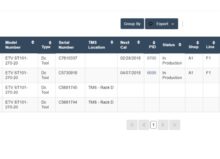
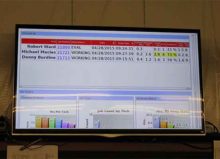
Calibration records and repair history are just two examples of the data a well-organized tool management program captures. This data can then be summarized and presented in custom reports, making visible trends and patterns that are otherwise hard to discern.
In turn, these analyses and reports support predictive maintenance efforts and continuous process improvement initiatives. This leads to lower costs and increased operational efficiency.
This benefit also highlights the advantages of using software designed for tool management rather than spreadsheets. With the latter, it’s very difficult to first capture and then extract any useful trend information that can support improvement efforts.
Signs You Need a Tool Management Program
Setting up a tool management program takes work, but the benefits make the time and effort involved worthwhile. If any of the following issues are present in your organization, it’s highly likely that you need to put such a program in place.
- Frequent downtime due to unexpected tool repairs
- Tool maintenance is reactive rather than being proactive
- Incorrect measurements or tool data have led to product quality issues on more than one occasion
- Spreadsheets aren’t being updated, or information is being updated in several places, but never consistently
- No consistency in how tools are managed (often a result of multiple people being involved but no one owning the system)
- The quality of data held on each tool is very variable
- It’s difficult to track down information for individual tools
Need Help Evaluating Your Current Tool Management Setup?
Today’s DC assembly tools are sophisticated pieces of equipment. When in calibration and running as expected, they help deliver high-quality products and high productivity. Keeping them that way takes commitment and specialist expertise.
Encore Systems are DC torque tool calibration and repair professionals. We help manufacturers get the best from the tools they have invested in, and carry out ISO 17025-accredited torque calibrations that ensure accuracy and compliance with standards.
Given the specialist nature of these tools, many of our customers take advantage of our tool management program. Customizable to suit their needs, this reduces downtime and repair costs and extends equipment life.
Contact us for more information.