Should You Invest in Assembly Tools With Built-in Transducers?

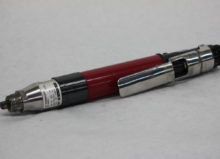
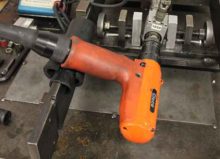
DC assembly tools are available with and without transducers. Deciding which type is most appropriate for your applications requires an understanding of transducer benefits.
Understanding Transducers
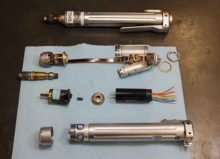
A transducer is a device that converts one form of energy into another so a physical phenomenon can be measured. The strain gauges used in many assembly tools are a type of transducer, and convert the twist that results from torque into a change in electrical resistance that is then measured through voltage.
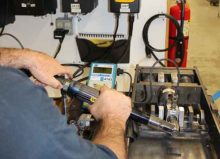
When these transducers are incorporated into a DC assembly tool, it’s possible to measure and report torque and angle as they occur in real-time, resulting in:
- Better process management
- Superior torque control
- Ability to capture detailed data
The downside is that transducerized assembly tools are more expensive and may not provide the best value for applications that don’t actually require such an assembly.
Yes: Your Application Is Safety-Critical
Much of the torque used to tighten a fastener goes to overcoming friction along the thread length. It’s not until it has become snug that it starts to stretch and achieve the desired joint integrity. Transducers can detect the point at which the fastener becomes snug and then measure the additional angle turned.
A transducerized assembly also makes it possible to program a desired angle to ensure the desired level of stretch and tightness is achieved.
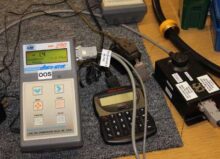
Additionally, transducers can output torque and angle data to a capture/storage and analysis system, and when coupled with a method of unique product identification, can provide vital records for traceability.
Yes: High-Volume Assemblies
The data capture capabilities enabled by transducerized assembly tools are extremely valuable in high-volume production. Torque and angle records enable process analysis and improvement for cost reduction and quality improvement. They can also identify when measurement drift is taking place and help ensure calibration takes place as needed.
Another benefit is that built-in transducers enable the use of safety features and complex tightening strategies. Safety features can include error detection and over-torque prevention, which can prevent damage and stop a process before a defective unit is built.
Yes: Working With Fasteners Highly Prone to Cross-Threading
If detected, cross-threading can be a costly defect to correct. If they are not scrapped, the affected parts will almost certainly need reworking, which is both disruptive and expensive. If not caught when it occurs, a defective product or assembly will likely fail in-service, which could result in a costly warranty claim and reputational damage.
Small fasteners and those with fine threads are at particular risk of cross-threading. Fastening into soft materials like aluminum or brass also increases cross-threading risks.
A transducerized assembly tool can quickly detect the abnormal torque pattern caused by cross-threading, often before any damage is done.
No: Prototype or One-Off Projects
It takes time to set up complex tightening strategies, define acceptable torque ranges, and manage tightening angles. On small projects, the work involved could outweigh the benefits achieved. Accurate torque measurement may still be beneficial, and record keeping may be desirable, but it may make sense to achieve this through the use of non-transducerized assembly tools.
No: Rough, Outdoor Environments
Most DC assembly tools are designed and built for use in industrial environments, where they’ll be subjected to shocks, impacts, and rough handling. However, the sensors and electronics used in transducerized tools are susceptible to physical and electrical shocks and can fail in dirty or wet environments.
No: Non-Critical, Low-Consequence Applications
Not every application requires precision or data collection. If all that is needed is the ability to insert and tighten a fastener so it will hold parts together securely, a less complex tool may be sufficient. Don’t invest in equipment with capabilities that won’t be used.
Find Reconditioned Assembly Tools With Transducers
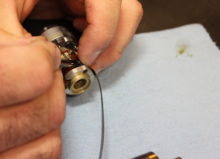
If you need a tranducerized assembly tool but don’t have the budget for a new model, opt for a reconditioned tool from Encore Systems. A reconditioned tool, unlike a standard repaired or refurbished tool, is fully functional and meets original performance specifications.
Founded over 20 years ago, Encore Systems is a leading calibration and repair service center specializing in assembly tool reconditioning. Visit our website to browse our inventory of reconditioned tools.